Hand-blown glass

The Work

Everything here is made by hand, one piece at a time.
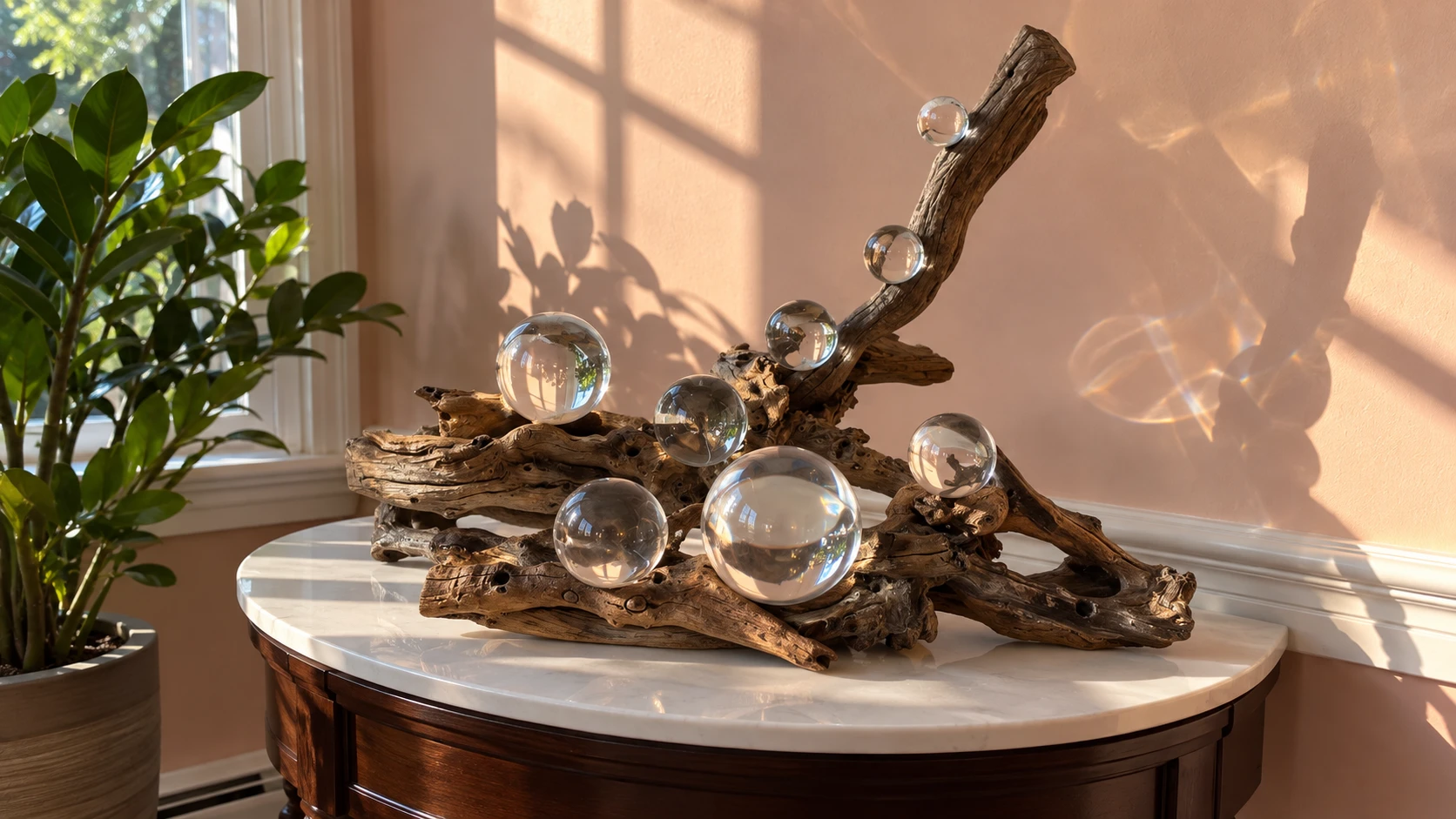
Six clear glass spheres resting in a weathered driftwood branch on a marble table, throwing caustic light onto the wall behind
A spherical cavity is cut for each one, and they go by size. Perfect spheres, in wood that is anything but.
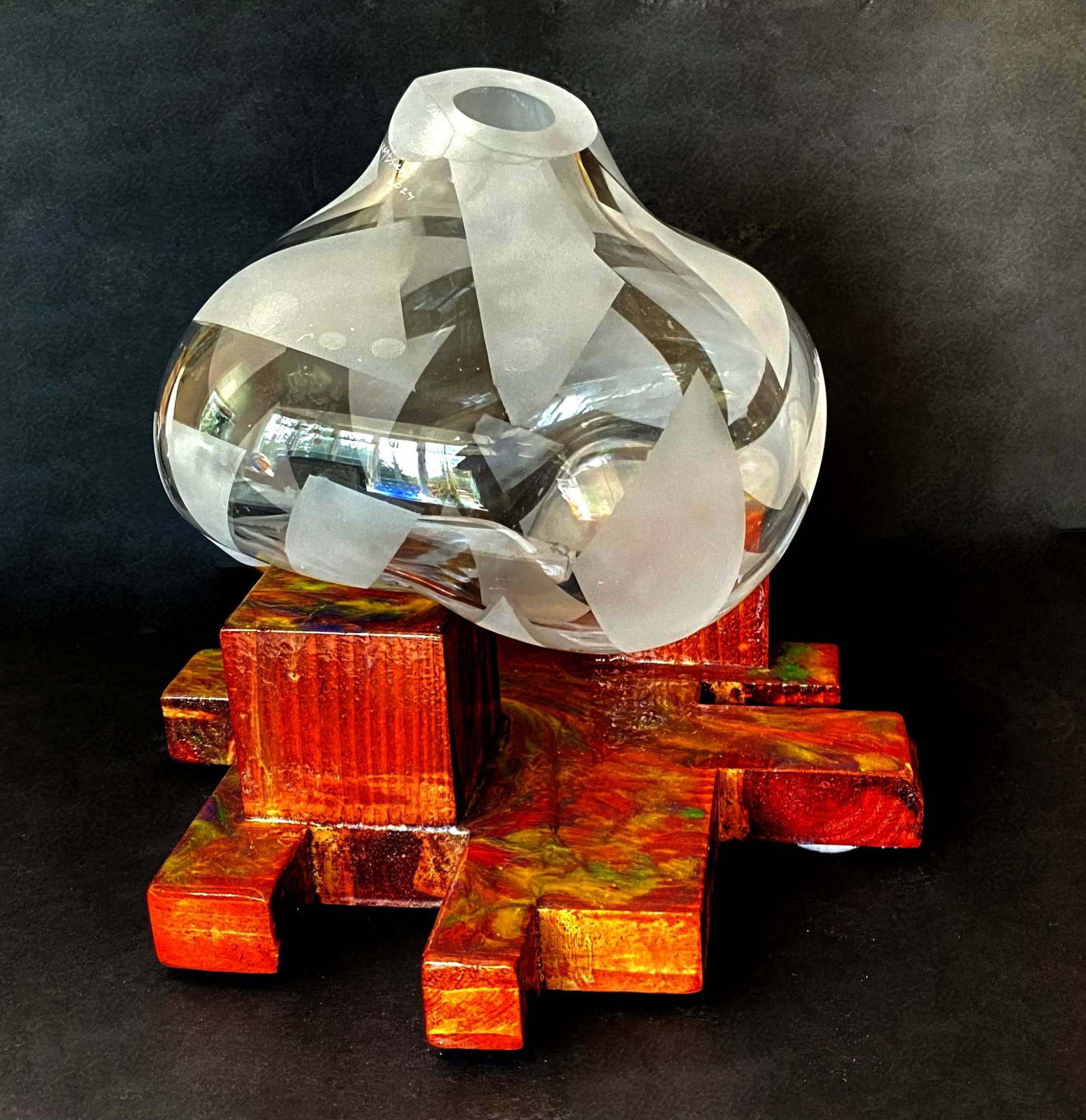
Frosted and clear blown glass vessel resting on an orange resin and wood base
Blown straight onto the wood, which survives under layers of wet newspaper. The clear bands are tape; everything around them was sandblasted.
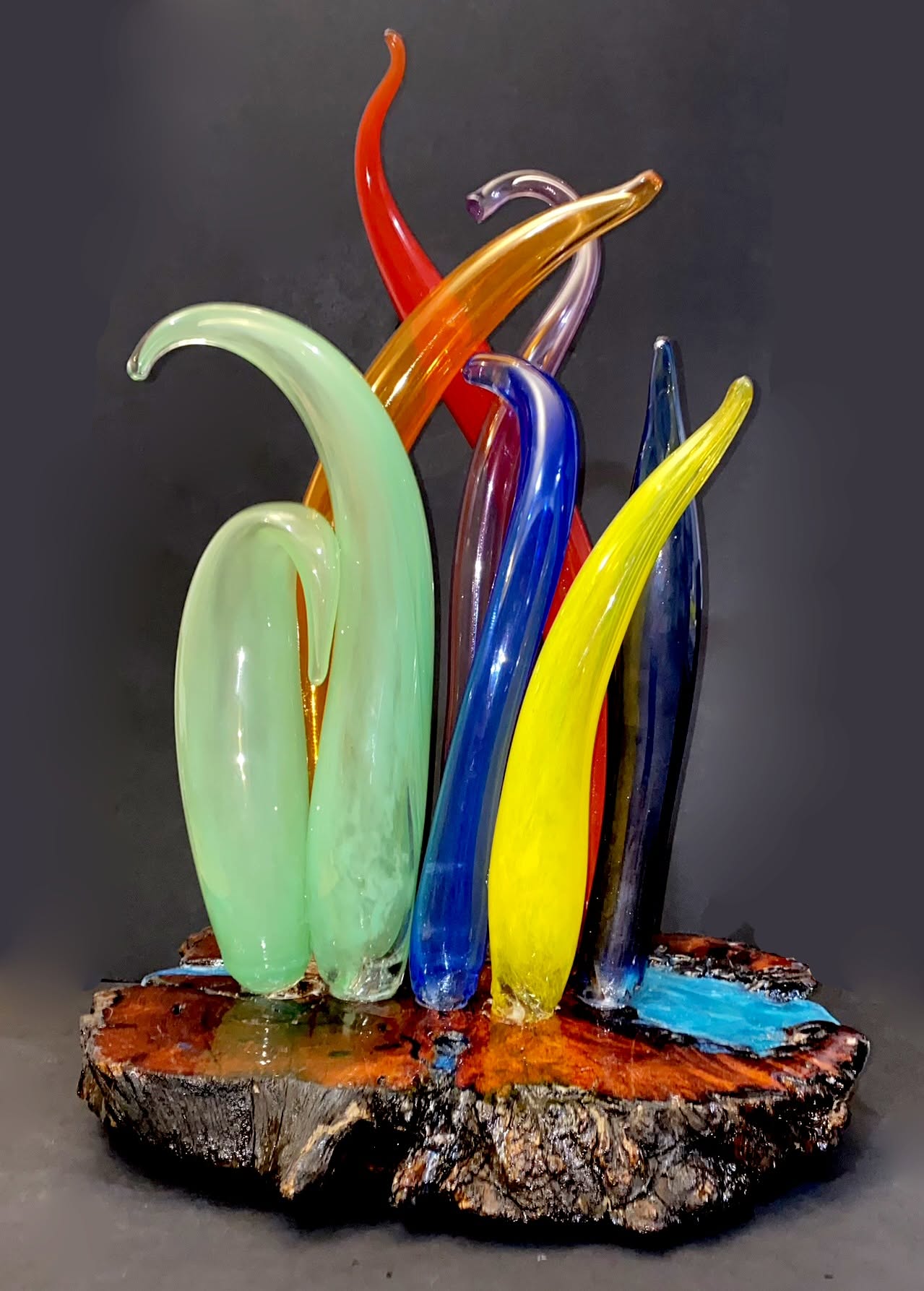
Upright glass forms in green, red, amber, blue and yellow rising from a live-edge burl base
Each form blown separately and hollow, set into holes drilled to a set angle. No colour family here: every piece is its own colour, and they have to work standing together.
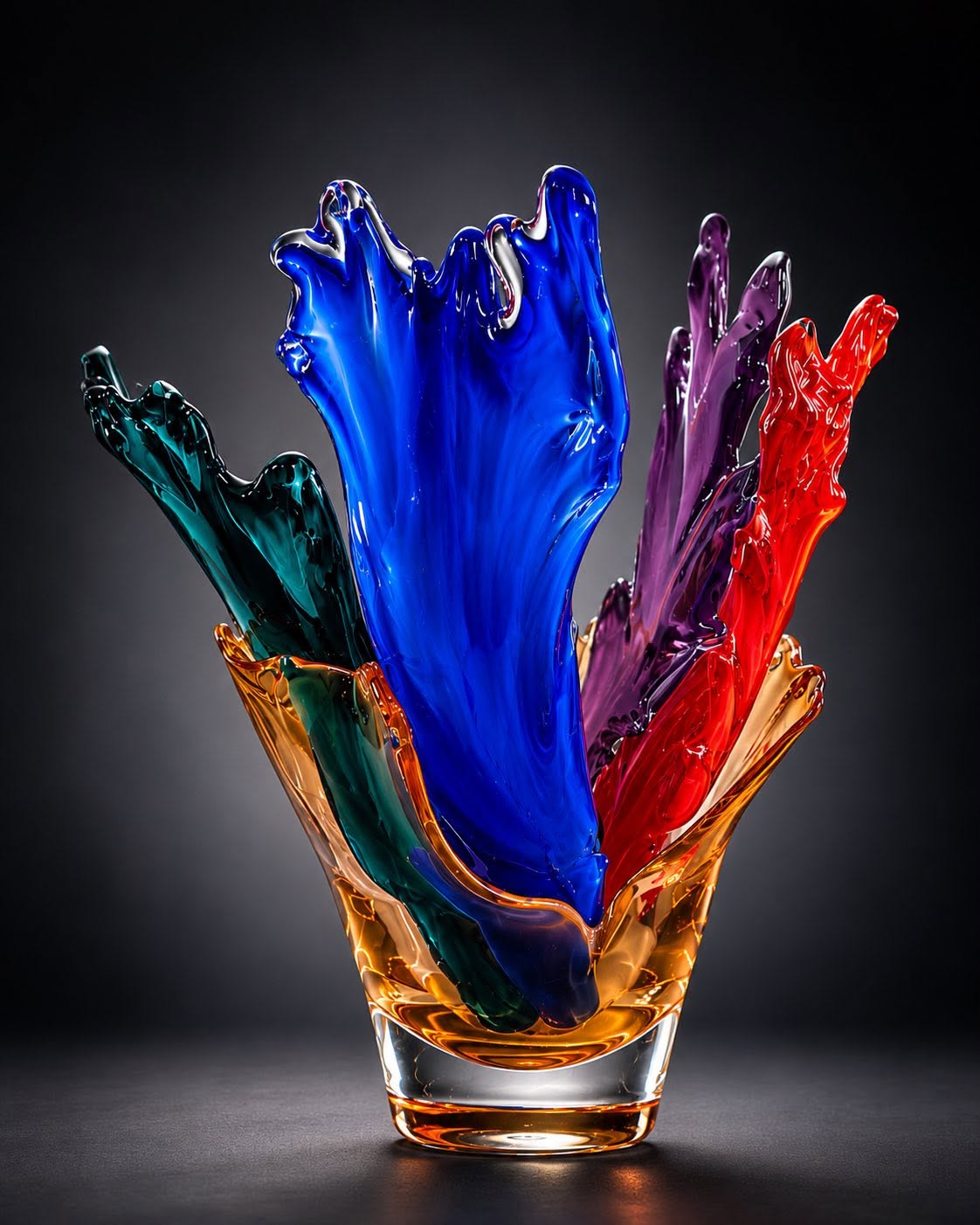
Blown glass vessel with blue, purple, orange and green petal forms rising from an amber bowl
The bowl and every blade were blown separately. They only met once cold, held with epoxy. Nothing was joined hot.
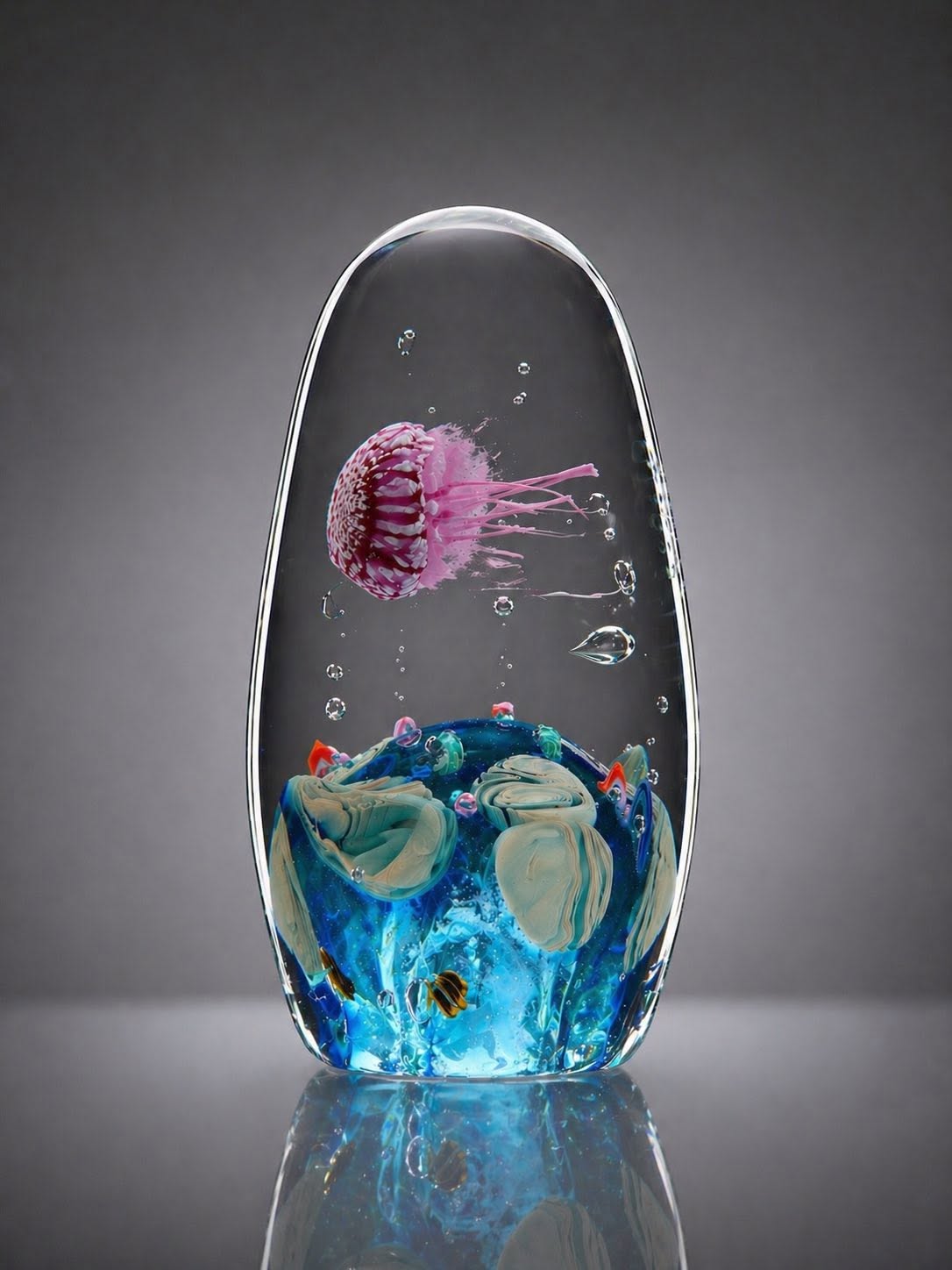
Clear glass form enclosing a pink jellyfish with bubbles and a blue reef below
All furnace work, no torch. The jellyfish is made first and kept hot while the reef is built under it. The bubbles are deliberate.
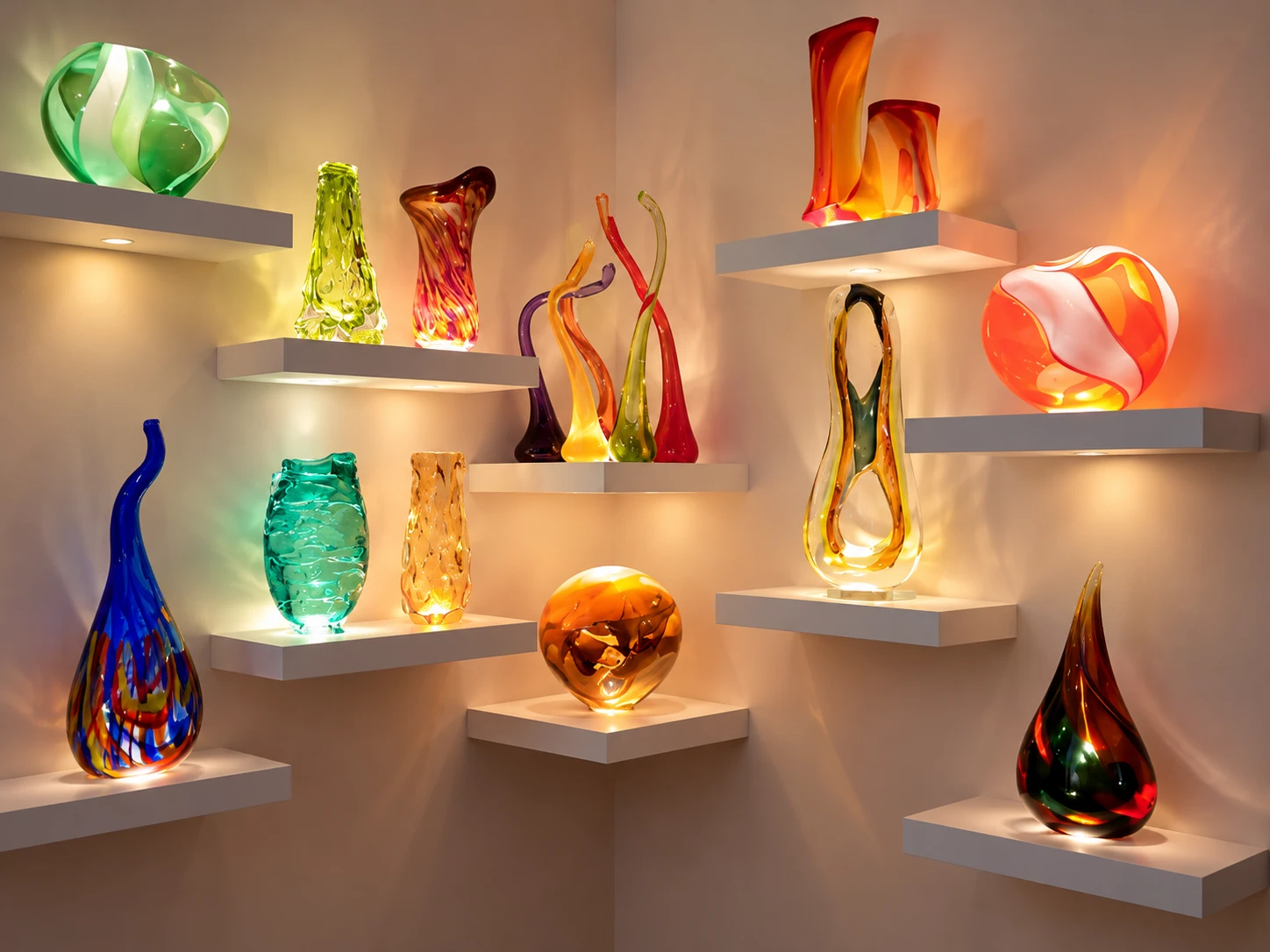
A corner of lit wall shelves holding fifteen blown glass pieces in green, amber, blue, red and orange, each shelf downlit so the glass glows
The house display. Pieces come and go as new ones are made, so this wall is never the same twice.
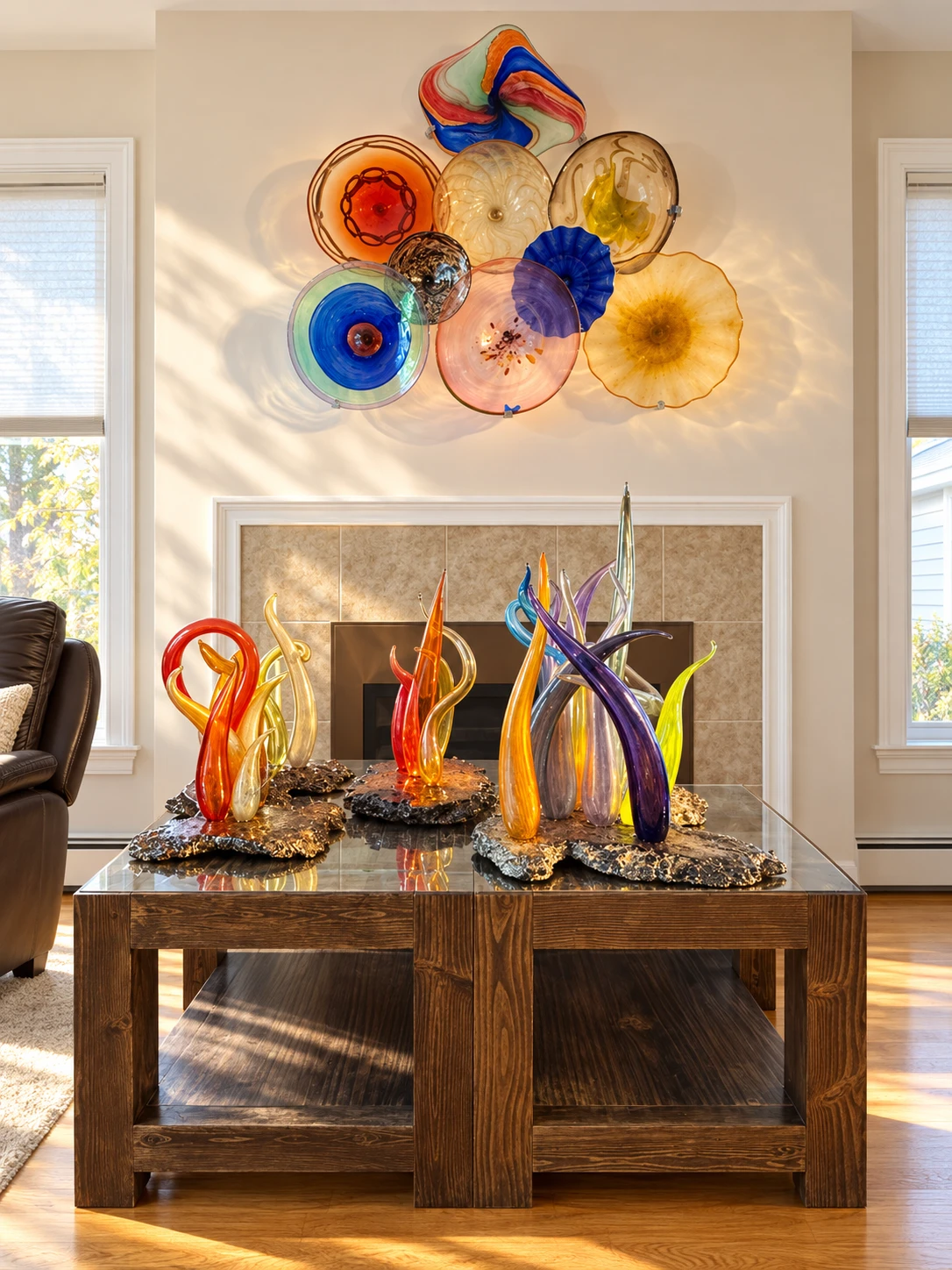
A wall installation of ten blown glass plates above a fireplace, with groups of tall flame-shaped glass forms on the tables below
The plates are the honest exception here. First year work, made over and over to learn the spin.
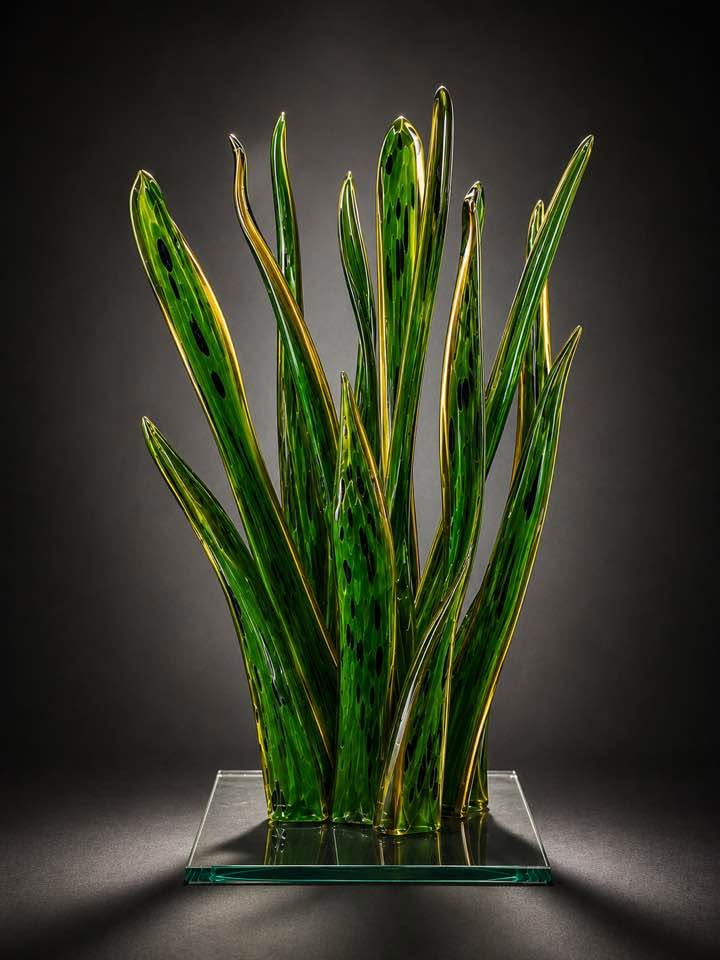
Tall green and gold glass blades with dark markings on a clear glass base
Every leaf blown separately and solid, greens with a yellow edge and dark frit for the markings. It is about wind.
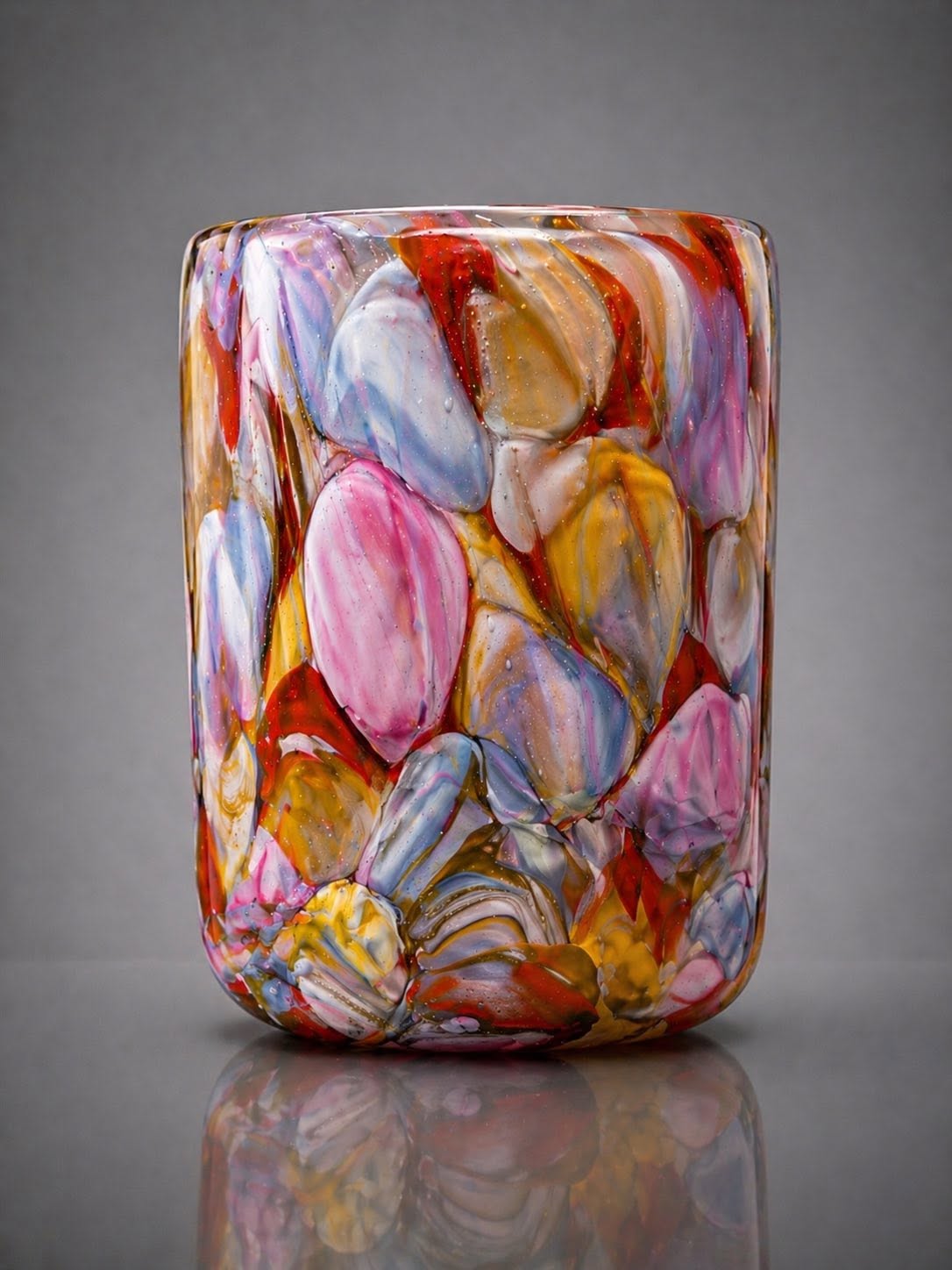
Blown glass vessel in pink, amber, blue and red mottled colour
No murrine here. Color is built up in powder, cut off and stuck onto the bubble in blobs, then marvered in.
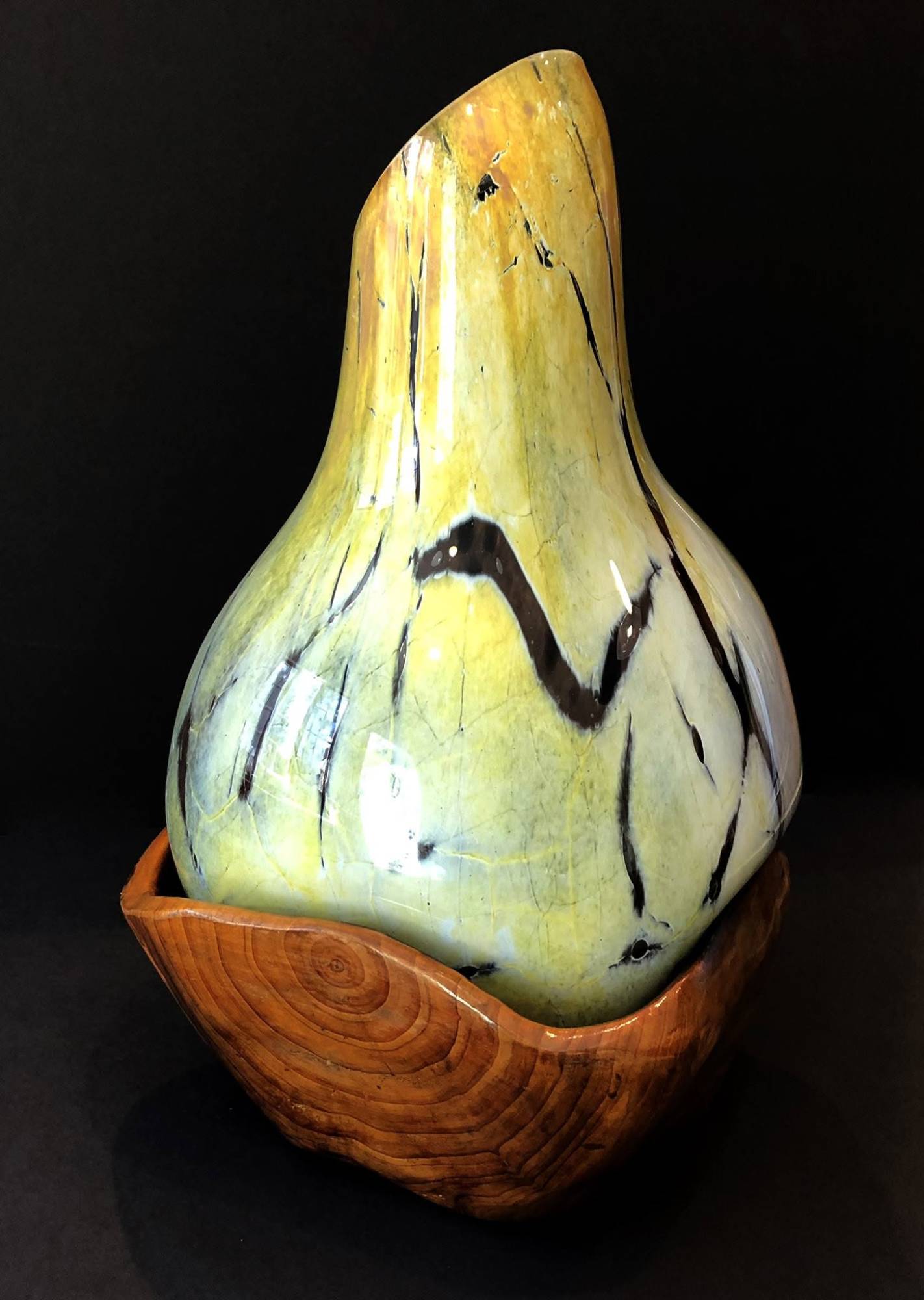
The Igal, a pale yellow and green crackled blown glass vessel with dark veining, seated in a carved wood bowl
Blown glass set into carved wood. Frank Stella named this one after me, and the name stuck.
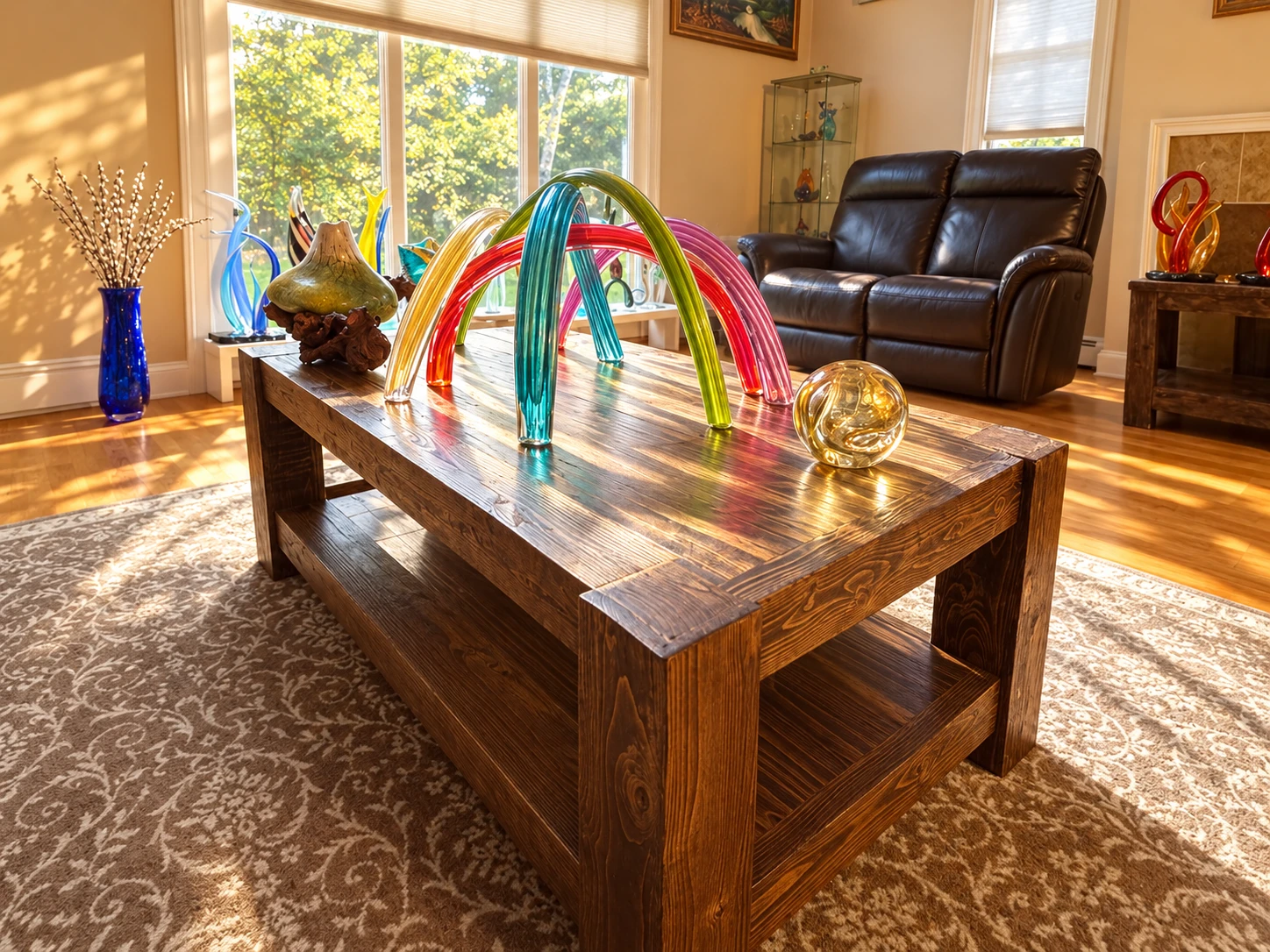
Five glass arches in red, yellow, green and turquoise spanning a wood table in a sunlit living room, with more glass on the windowsill behind
Hollow, blown into a ridged mold, stretched long, then bent. Each arch is ground until it stands on its own.
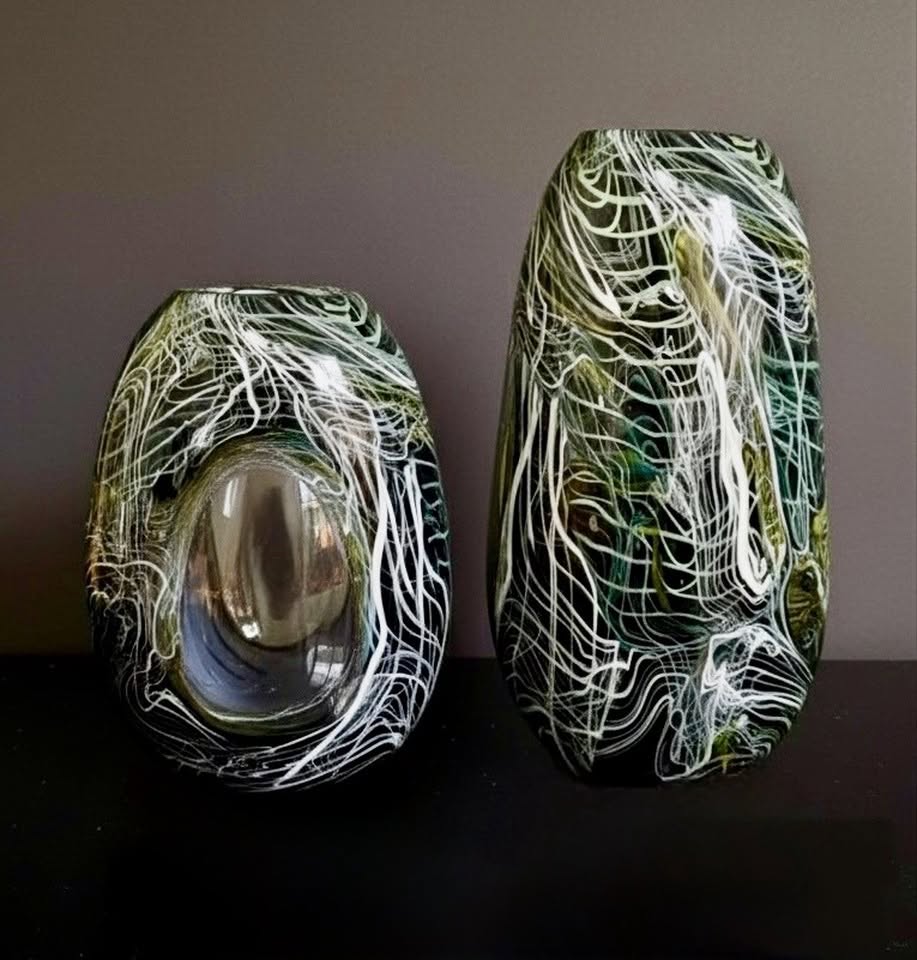
Two dark glass vessels threaded with fine white and green lines
Sixteen white canes laid in a mold, picked up red hot and trailed round until they stretch that fine. The openings are made with a pick before the last gather.
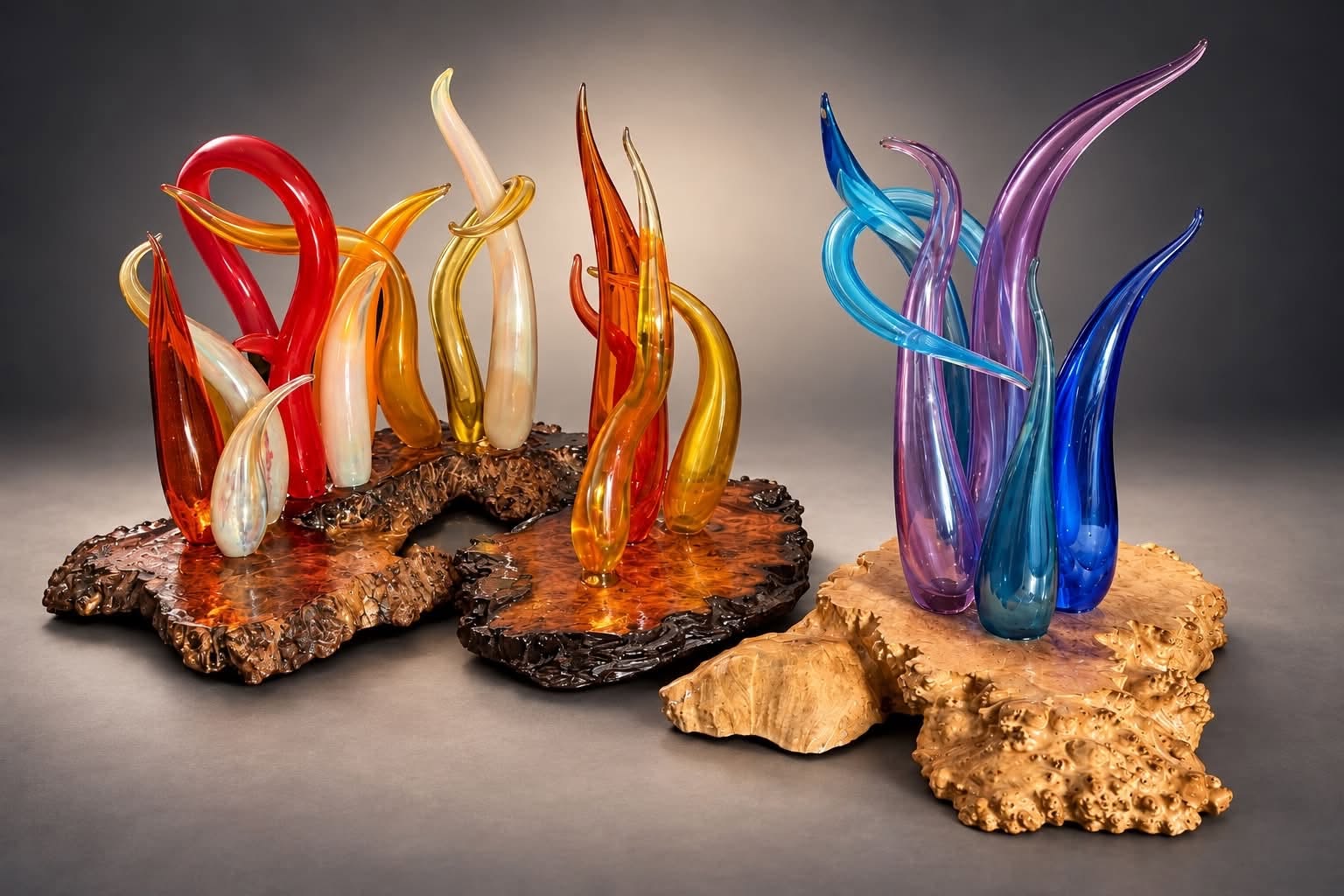
Three groups of glass forms in red and amber, orange, and blue and violet, each on its own live-edge wood base
Three separate sculptures. They stand together because that is where I store them, and it turned out to work.
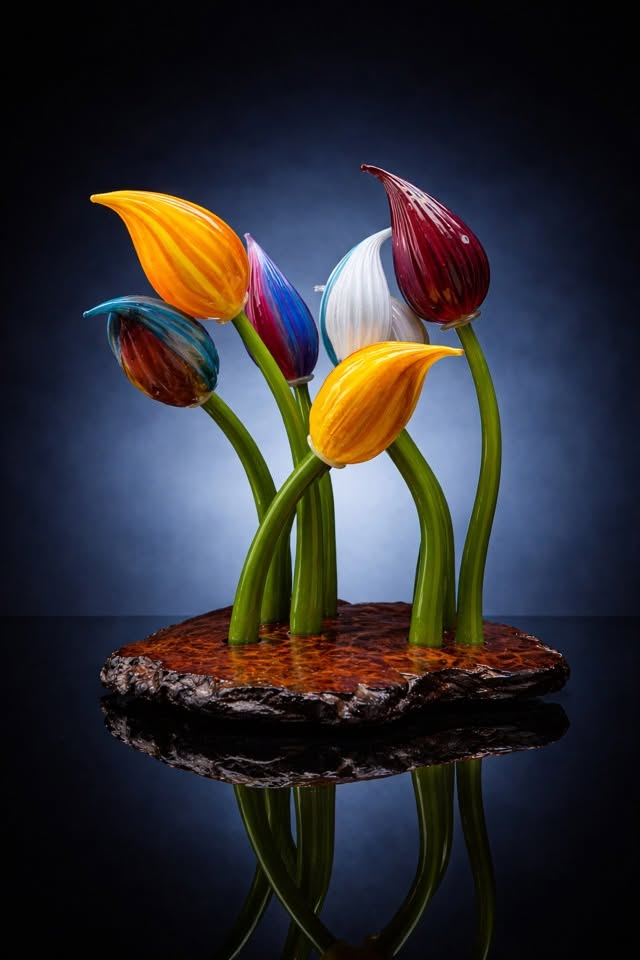
Hand-blown glass tulips in yellow, red, white and blue on green stems, set into an amber burl base
Every stem and flower blown separately, then ground cold to an exact angle. Each stem touches its neighbor, which is what makes it rigid.
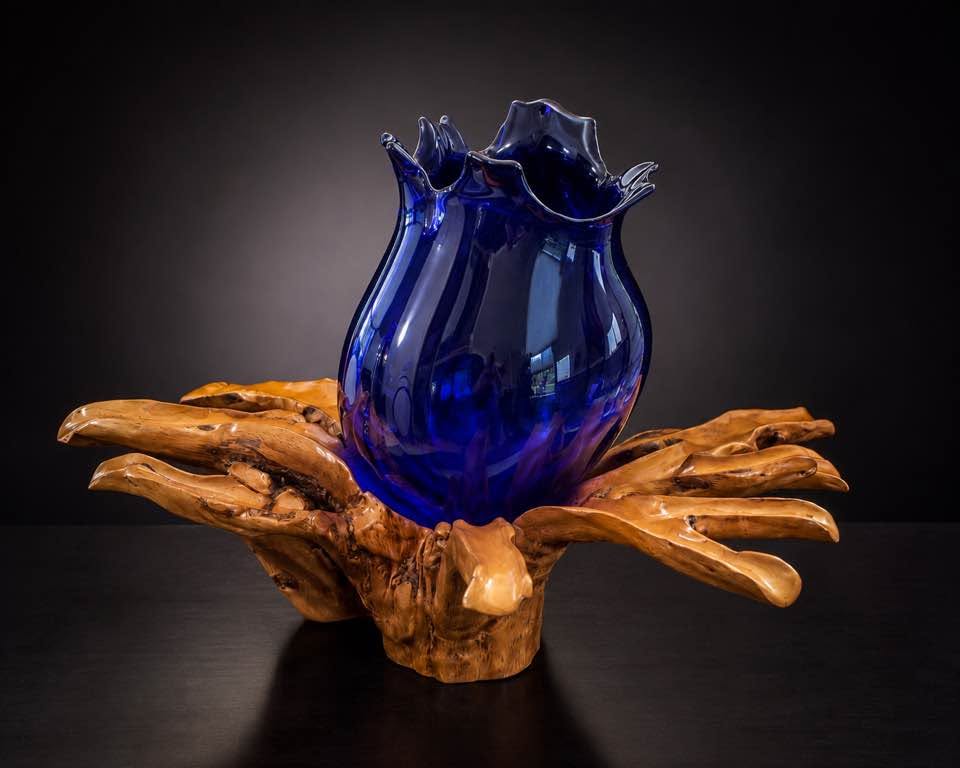
Deep blue blown glass vessel with a flared rim, set into a pale root-wood base
The only piece here blown into its wood. The hot glass went down into the root, so the join is exact.
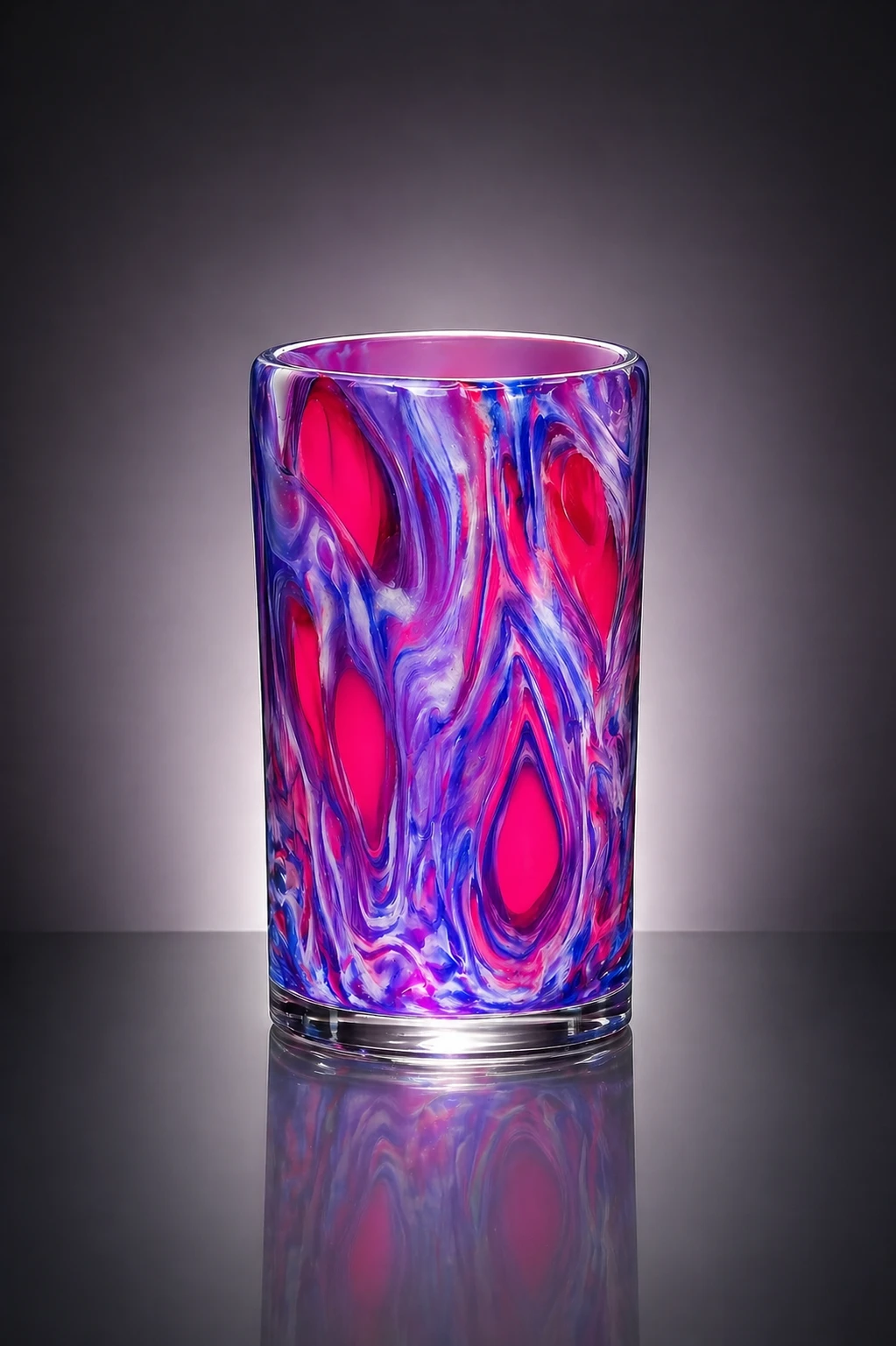
Blown glass cylinder in magenta, violet and blue, the colour drawn into long vertical flames
Murrine I cut myself, picked up over opaque red so the clear centers show it through. Each circle pulled into a teardrop with a pick.
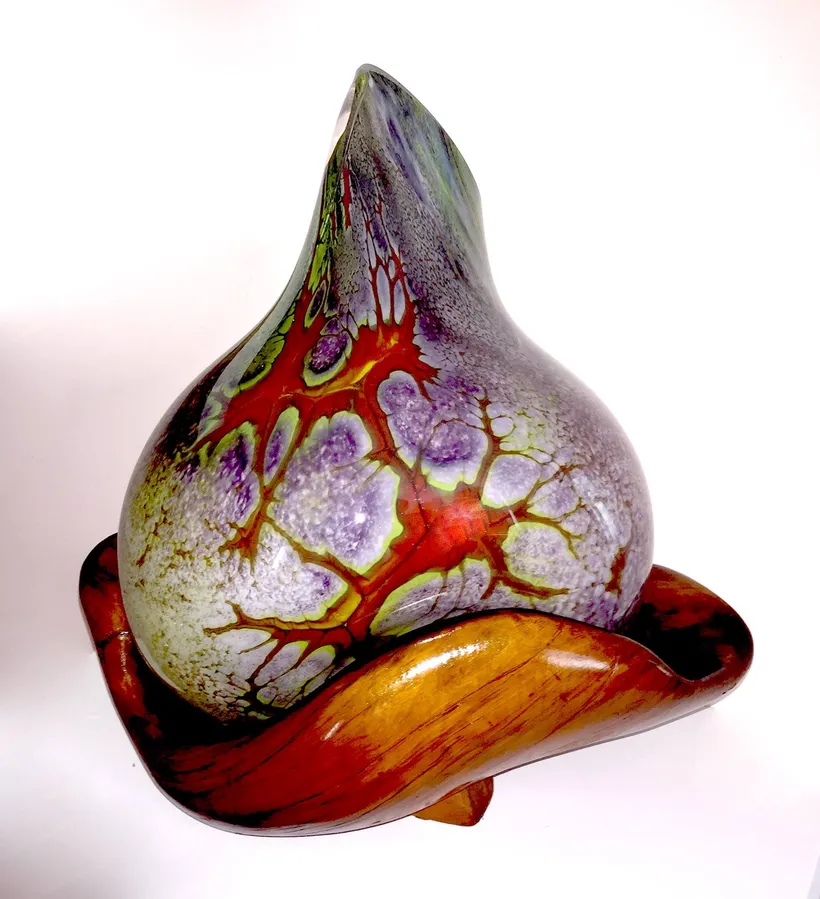
A blown glass vessel in white, violet and green, its surface broken into wide cells with red veins running between them, resting in a flared amber and red glass base
Layers of colour laid straight on top of each other with no gather between them, some of them carrying metal. Heat it hard enough and they react, and the cells come up where they want. I have almost no say in where.
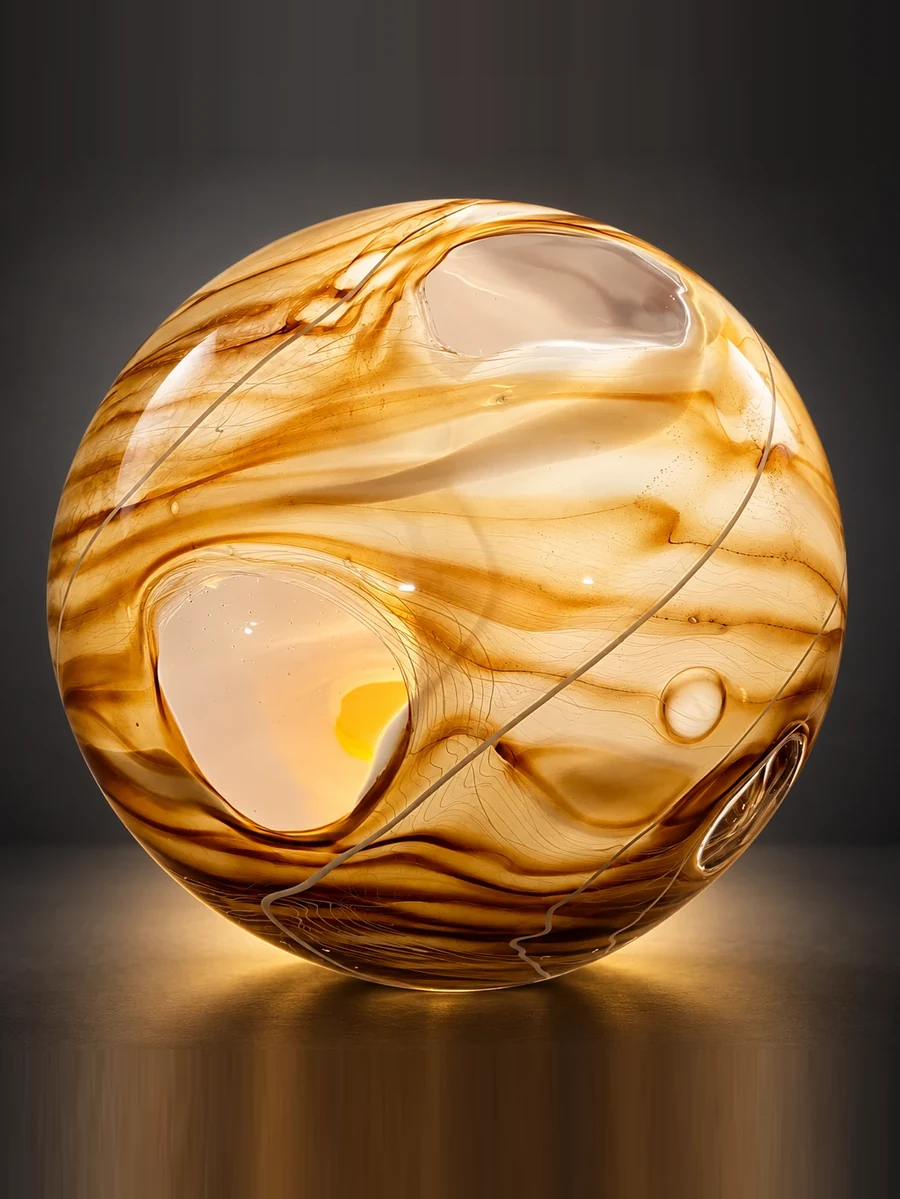
A blown glass sphere in amber and cream, the colour pulled into wide bands, with two clear openings worked through the wall and the light coming up through the floor beneath it
Amber and cream wrapped round the body. The openings were made with a pick before the last gather.
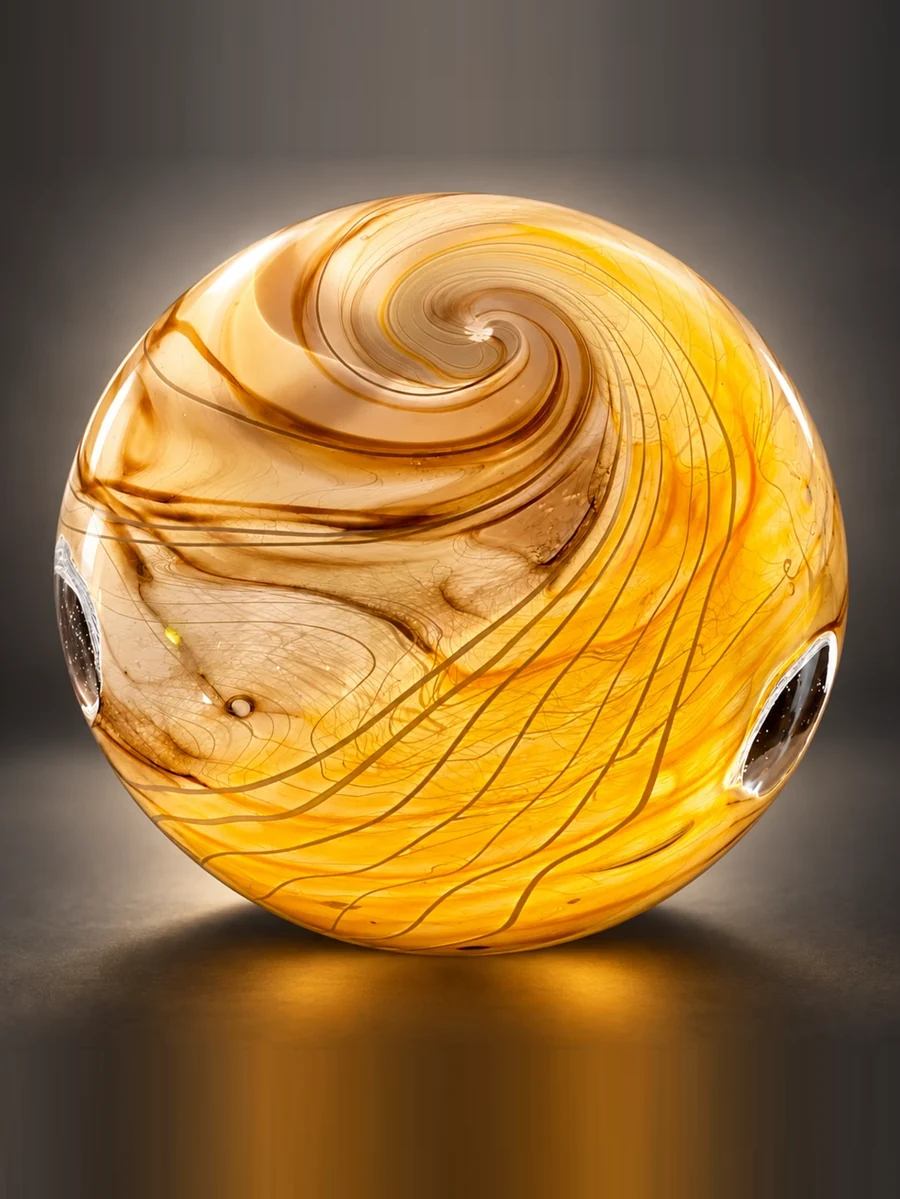
The same blown glass sphere turned around, showing a spiral worked into the top and fine trailed lines running down the side, with two clear openings at the equator
The same piece turned around. The spiral and the trailed lines only line up from this side.
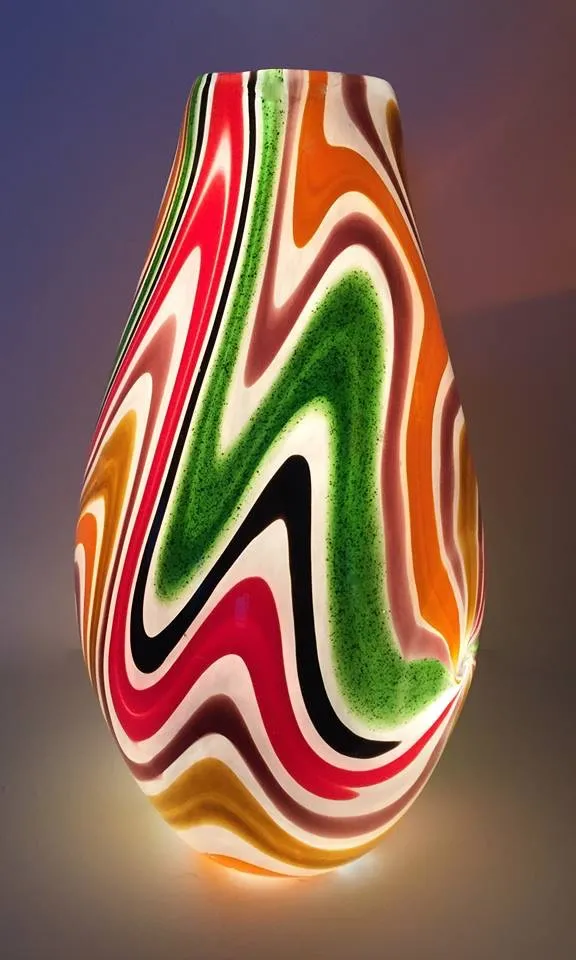
A tall blown glass vase in red, green, orange, black and white, the colours combed into deep zigzag waves running round the body
The canes go on straight. Then each band is reheated on its own with a torch and twisted by hand, every one the opposite way to the last, all the way up. Moving it onto a second pipe turns the axis ninety degrees, and blowing it out from there is what pulls the twists this far.
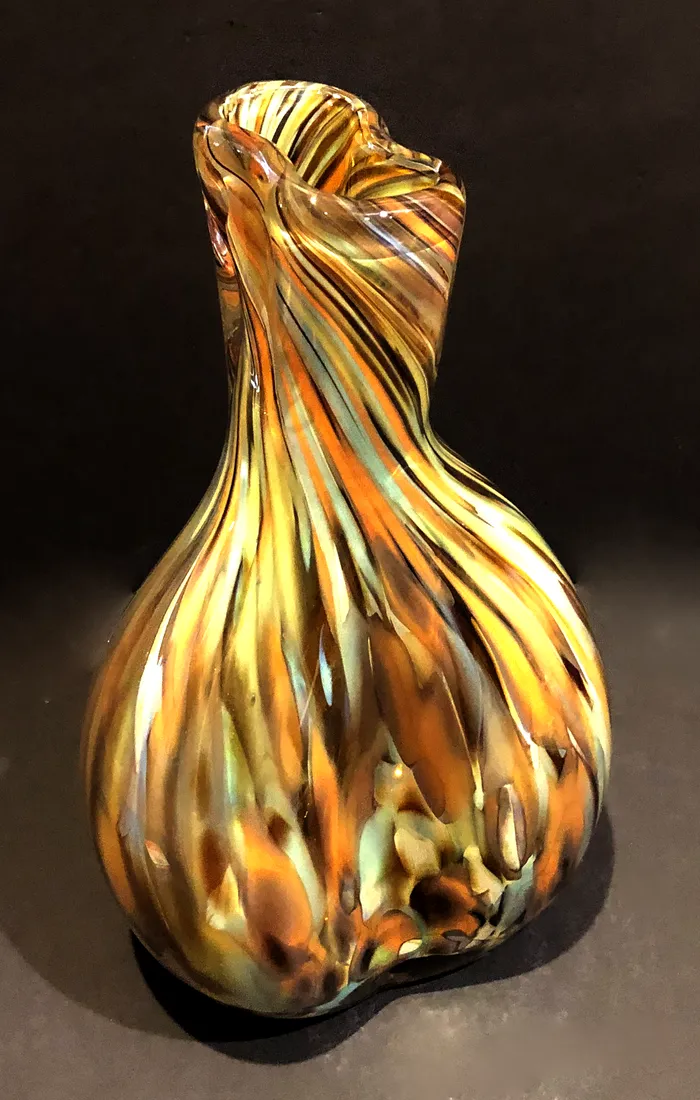
A blown glass vase in amber and gold with fine ribs spiralling up a folded, twisted body and dark speckles pooling at the base
Canes from one family of colour, amber through yellow with a little grey, broken into pieces and picked up on a solid gather, then stretched and blown into. No mold at any point: the form is all hand. The spin comes from twisting it as far as it will go while the mass builds.

Enquiries: glassinaction@gmail.com